Housing done right
Each project shown here was delivered through multisector partnerships, community input, and a commitment to exceed both regulatory and ethical standards.
From Passive Haus-inspired builds to one of Canada’s first mass timber affordable housing projects, these developments reflect what’s possible when technical precision meets values-driven design.
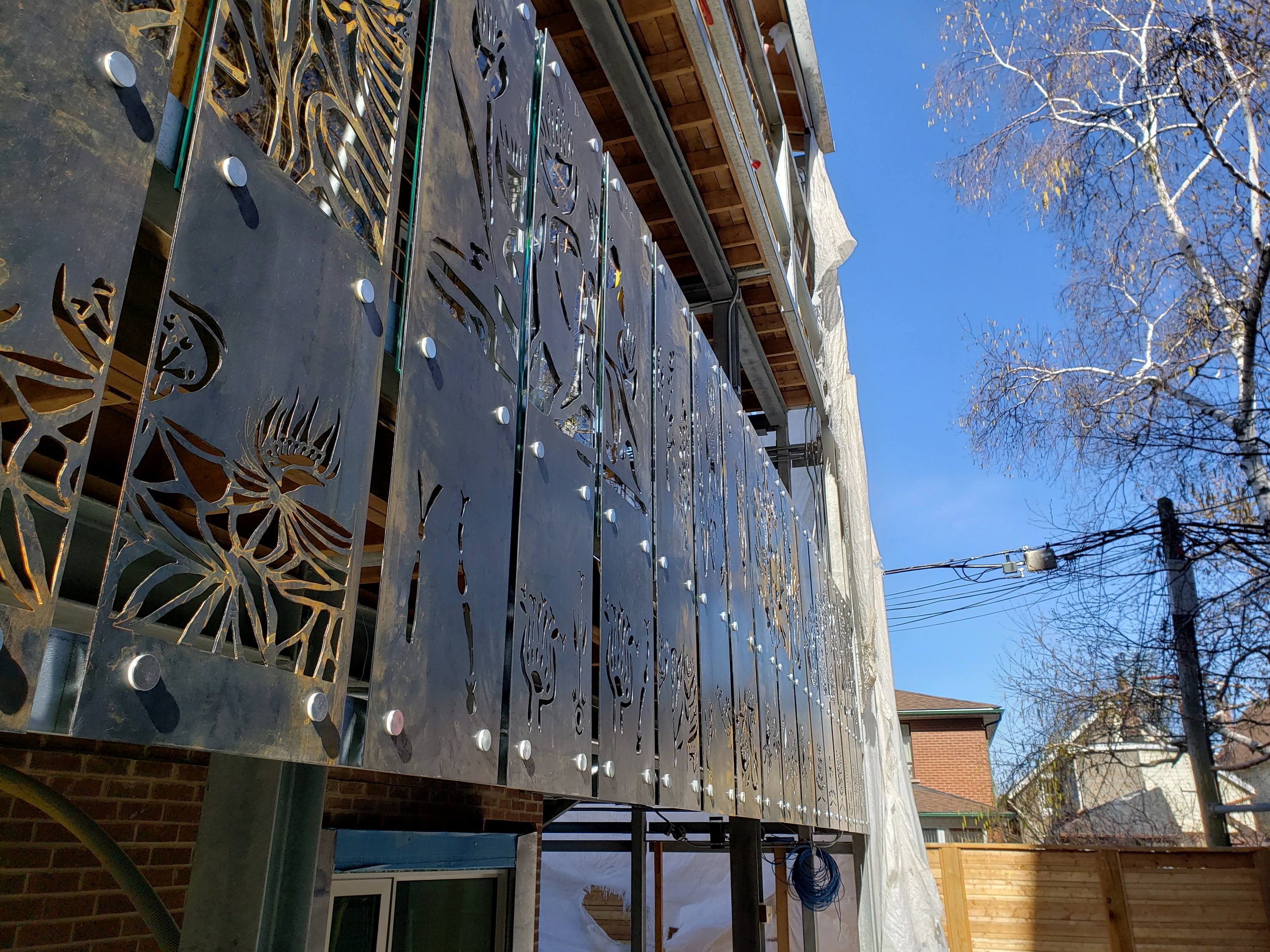
25 Leonard Avenue – Phase III
Toronto, ON
Tenant-led design meets deep sustainability.
This final phase of a long-term, mixed-income housing development prioritized community input from day one. Mo led a collaborative design process that incorporated tenant feedback, local artists, and culturally rooted design elements. Passive design features—including optimized insulation (R33–R34) and strategic window placement—surpassed building code standards and reduced long-term operational costs.
Key Features:
Tenant-led co-design process
Passive structural elements (above R30)
Public art & cultural design integration
Delivered under budget despite pandemic supply constraints

1120 Ossington Avenue
Toronto, ON
Pioneering mass timber for affordable housing.
One of the first affordable housing developments in Canada to use mass timber, this 3-storey modular build transformed infill land into sustainable, dignified housing. Mo coordinated across City of Toronto departments, community partners, and technical teams to ensure efficient approvals and a high-performing outcome. His early-stage leadership helped position the project for design innovation and timeline success.
Key Features:
Mass timber construction for low-carbon, high-efficiency performance
Coordinated stakeholder relationships across sectors
Smart site strategy to maximize unit yield and minimize footprint
Embedded cultural and accessibility priorities in early design

138 Pears Avenue
Toronto, ON
Efficiency without compromise.
This high-density urban retrofit prioritized sustainability without driving up costs. Mo’s leadership on materials selection, upgrading & modernizing the building envelope, window replacements, and energy systems optimization helped achieve water and power savings that lowered operational costs for the organization and reduced fees for tenants.
Key Features:
New facade
Low-flow water systems
Optimized building envelope
New windows
Green energy-ready infrastructure
Community space integrated into design